Jumper's Knee (Patellar Tendinitis)
The Precision Report:
Your Guide to Pain Free Fitness

Jumper's Knee (Patellar Tendinitis): Why Rest Isn't Fixing it - and What Actually Works
If you have pain right in the front of your knee, just below the kneecap, especially during running, jumping, Olympic lifts, wall balls, or box jumps, there’s a good chance you’re dealing with jumper’s knee, also known as patellar tendinitis.
This is a very common knee issue I see in CrossFitters, runners, and highly active adults—and it’s also one of the most misunderstood.
If you’ve tried resting, icing, or “pushing through it” for weeks or even months with little improvement, this article will explain why that hasn’t worked and what you should be doing instead.
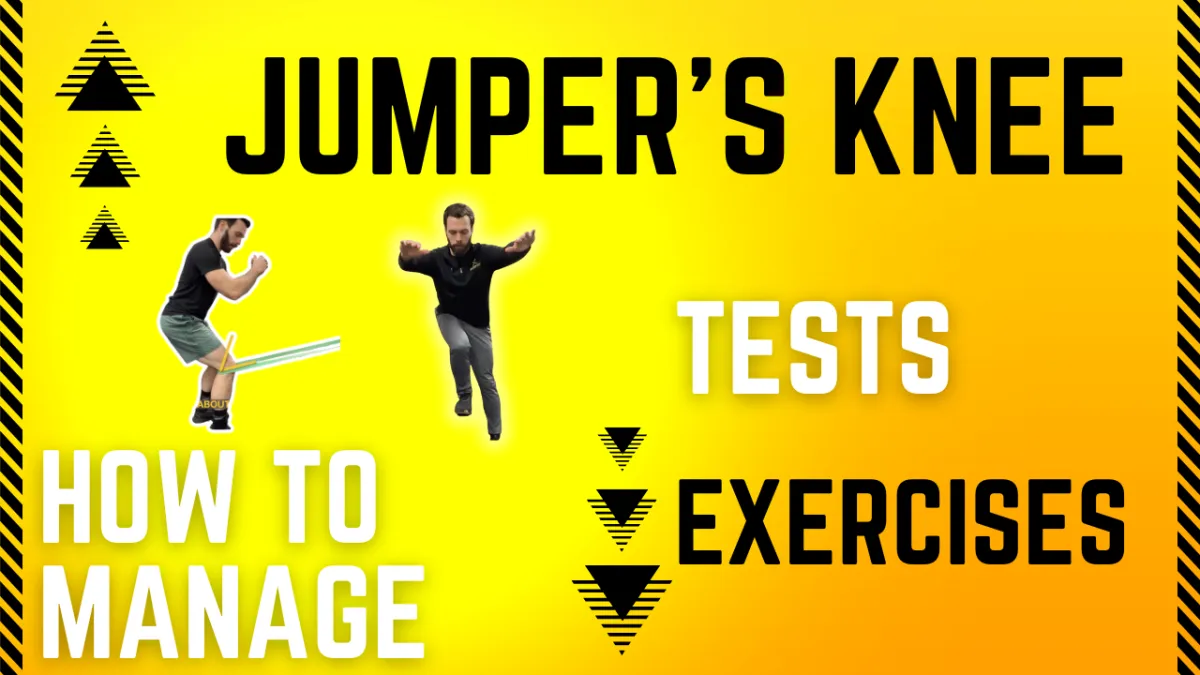
If you would prefer to watch the video going over this information, click below:

What Is Jumper’s Knee?
Jumper’s knee is irritation of the patellar tendon, the thick tendon that runs from your kneecap down to your shin bone (tibia).
It’s most common in people who do: running or jumping based sports, CrossFit, and olympic weightlifting
The root cause is almost never “just inflammation.” It usually develops due to too much impact too soon, poor load tolerance of the tendon, strength imbalances(especially quadriceps weakness, mobility limitations at the ankle, knee, or hip that overload the knee (or some combination of the above).
Why Rest Alone Doesn’t Fix Jumper’s Knee
Rest can temporarily reduce pain—but it doesn’t address the underlying problem.
When patellar tendon pain lingers, the structure of the tendon itself begins to change. Healthy tendon fibers are straight and strong. Irritated tendons become wavy and overstretched, which reduces the tendon’s ability to absorb load efficiently. As soon as you return to activity without fixing the root cause, the pain often comes right back.
A helpful analogy:
Resting without addressing the cause is like taking a pebble out of your shoe for a few days—then putting it right back in and wondering why your foot still hurts.
How to Test for Jumper’s Knee
1. Tenderness Test
Press directly on the patellar tendon just below the kneecap. If the tissue in this area is tender to the touch, especially where it inserts into the knee cap or shin bone, this could be an indicator.
2. Lateral Step-Down Test
This test looks at load tolerance, control, and strength.
Use a box (6–24 inches - depending on ability)
Slowly step down to tap your heel and return up
Perform as many controlled reps as possible in 30 seconds
What to look for:
Pain at the front of the knee, knee collapsing inward, heel lifting from the box, loss of balance, significant side-to-side differences
What Actually Helps Jumper’s Knee Heal
Step 1: Modify Training Load (Not Stop Training)
You don’t need to quit exercising—but you do need to reduce impact temporarily.
Decrease jumping and running volume, quick explosive movements like wall balls and box jumps.
Cross-train with biking, rowing, swimming, or sled work for cardio, and weight training as mentioned further along in this post.
Avoid pushing through sharp tendon pain, but small amounts of non-lingering discomfort are ok.
Step 2: Strengthen the Quadriceps
The patellar tendon connects directly to the quadriceps.
If your quads aren’t strong enough, the tendon takes on more load.
Start with: Spanish Squats (Isometric Loading)
Band behind the knee, sit into ~45° squat - Hold 45 seconds. Perform 4 rounds
This reduces pain and starts restoring tendon structure.
Add In: Slow Heavy Knee Extensions
Find a knee extension machine or use a band. Find a resistance that is challenging with the following rep scheme: 4 seconds up, 4 seconds down for 3 sets of 12–15 reps.
If these are too painful,blood flow restriction training (BFR)can be an excellent alternative when properly supervised.
Step 2A: Strengthen the Hips
While working on reducing the pain with exercises above, start working on strengthening your hips in ways that won't aggravate the knee. Weak hip stabilizers often cause the knee to collapse inward or have poor control, increasing tendon stress.
A good option to start with: Side plank clamshells, more effective than standard clamshells because they’re weight-bearing, improves knee control and stability.
Step 3: Progress to Higher level Strength
As pain improves, progress to heel-elevated goblet or front squats - again working on slow controlled speed. Then, move onto higher level exercises like Bulgarian split squats (quad-biased)
How Long Does Jumper’s Knee Take to Heal?
With proper load management and progressive strengthening:
Most people improve in 4–8 weeks, however this differs for everyone. That also does not mean you are done training these areas after the pain goes away.
Make sure to gradually re-introduce impact based activities such as jumping and running. A good rule of thumb is to start back with a small non-painful amount, and progress no more than 20% per week in total running or jumping.
The Big Takeaway
Jumper’s knee isn’t something you need to rest away or ignore.
✔ It requiressmart load management
✔Targeted quadriceps strengthening
✔ Addressingmobility and hip control
✔ Gradual return to impact
Want a Personalized Plan?
If you’re serious about getting back to CrossFit, weightlifting, or staying active without knee pain, I offer an online knee program designed specifically for active individuals.
You’ll get:
A personalized plan
Smart progressions
Guidance on strength, mobility, and load
Optional Blood Flow Restriction integration
👉Apply for a free discovery call here.
And if you found this helpful, be sure to subscribe for more videos on managing knee pain, training smarter, and staying active long-term.
– Dr. Ryan Kalkbrenner, PT, DPT, OCS
Precision Fitness Physical Therapy- Owner